Roasted Butternut Squash
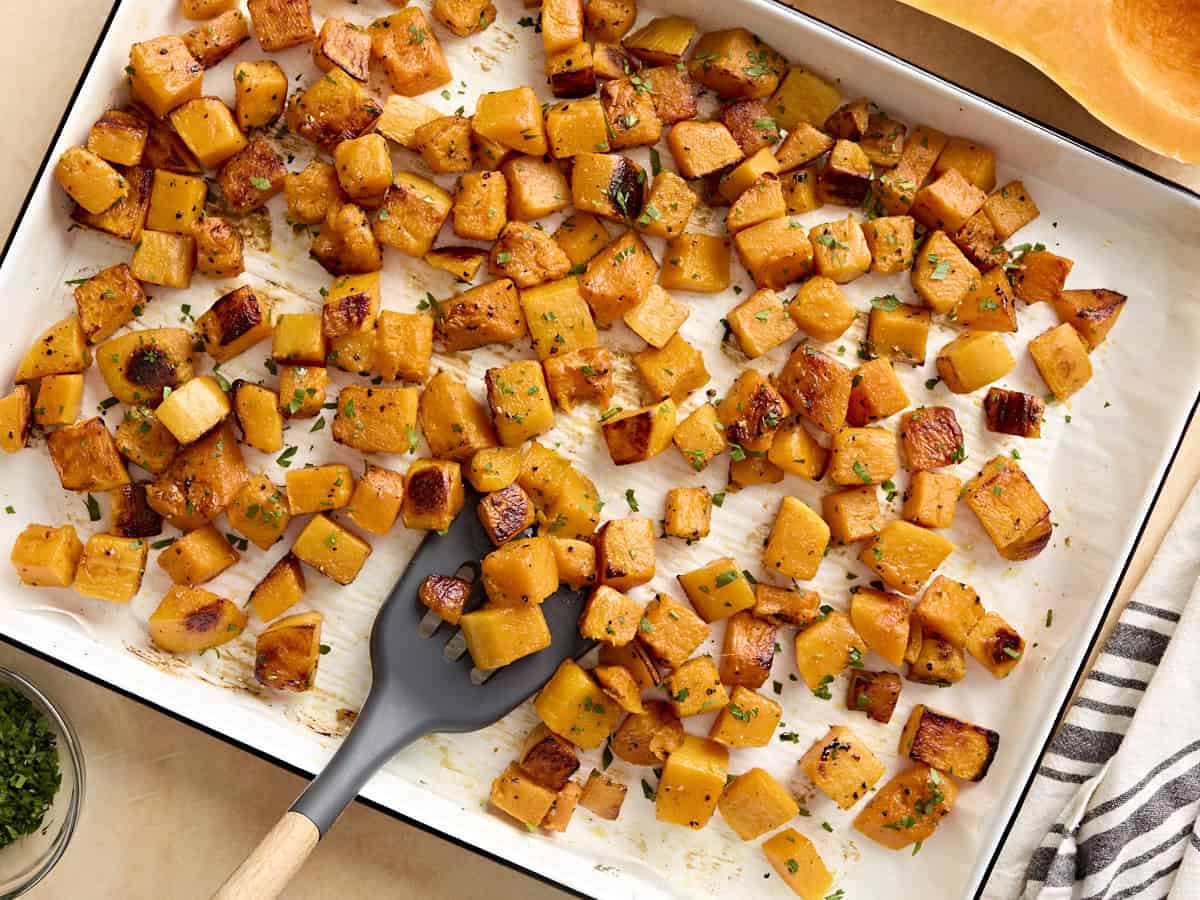
Listen, I know we all have a soft spot for pumpkin spice everything when fall comes around, but have you ever had perfectly Roasted Butternut Squash?! Nothing screams autumn louder than butternut squash for me (and I feel like it’s been living in the shadow of pumpkins for long enough!) This recipe couldn’t be easier, but the flavors are everything you could ever want in a fall side dish. The edges of the squash get perfectly caramelized, and the insides become tender and slightly sweet. I also use a simple blend of seasonings that lend themselves to any main course you pair it with. It’s budget-friendly, delicious, and oh-so-autumnal!

“I love butternut squash but have always been intimidated by peeling it. Thank you for the tips, this was easy and turned out great! I ate some plain and put the rest in chili. The spices are simple but so flavorful.”
Danna
An Easy Fall Side That’s Anything But Boring
This budget-friendly squash has a subtly sweet and nutty flavor, similar to pumpkin or sweet potato with a texture that’s a bit smoother and less starchy. Roasting it brings out its natural sweetness and makes it tender and caramelized—perfect for fall!
For this recipe, I used a nearly 3-pound butternut squash, which gave me about 6 cups once roasted! I cut it into fairly large, even pieces and spread them across two baking sheets to give the edges plenty of room to caramelize. Those golden edges develop a deeper, roasted flavor, and cutting the cubes to a similar size helps everything cook evenly. I also kept the seasonings simple with garlic powder, salt, and pepper so the squash can pair with just about anything. This recipe is ridiculously simple, but it’s an important one to master; from this roast butternut squash, you can make an elegant butternut squash soup, top a festive butternut squash salad, or just enjoy it as a healthy side dish during the holidays. Don’t roll your eyes at the simplicity of this recipe; embrace it!! 😉
Recipe Success Tips
- Choose the right size squash. My butternut squash weighed 2 lbs. 15 oz. and gave me 6 cups once roasted, enough for twelve ½-cup side servings! I recommend choosing one that feels heavy for its size, with a longer neck and a smaller rounded bottom. A longer neck generally means more usable flesh and fewer seeds. Smaller squash will give you fewer servings, so keep that in mind if you’re feeding a crowd.
- My favorite peeling hack for beginners! While the skin of butternut squash is edible, we want to remove it for this recipe. It’s usually easy enough to peel with a veggie peeler, but if it’s proving a bit tricky, try this hack: Stab the squash a few times with a fork, then microwave it for 2-3 minutes to soften the skin. This will make peeling and cutting much easier! We’ve also got a handy guide on how to cut butternut squash here.
- Cut the squash into large cubes. Aim for roughly 1-inch pieces, using my step photos below as a guide. I chose a larger dice so the squash could develop lightly browned edges without the centers becoming overly soft. Keep the cubes as even as possible so they finish cooking together.
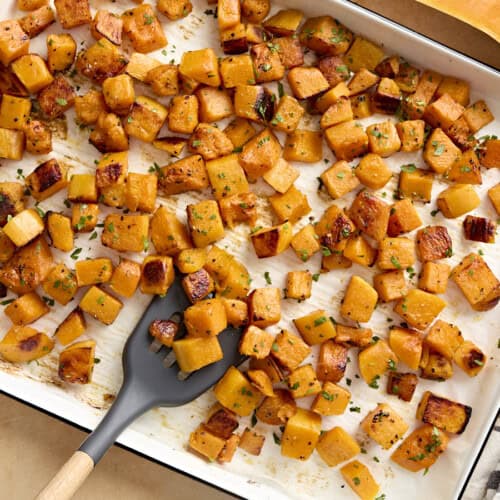
- Give the squash room to roast. I needed two baking sheets for my nearly 3-pound squash. Spread the cubes in a single layer with a little space between them so the heat can reach more of their surfaces. This helps develop those lightly caramelized edges, which give the squash a deeper, sweeter roasted flavor!
- Check the largest pieces for doneness. Use the 35-minute cooking time as a guide. I look for lightly browned edges and soft centers. A fork should slide into the thickest cube without resistance, but the squash should still hold its shape. If it’s still firm, give it a few more minutes and check again.
- Switch up the seasonings! I keep this recipe simple with garlic powder, salt, and pepper, but you can easily change the flavors to suit your meal. For a sweeter version, try adding a little brown sugar and cinnamon before roasting, like I do with my roasted acorn squash, or drizzle with maple syrup after roasting. For something more savory, try rosemary, thyme, or poultry seasoning. One reader even swapped the garlic powder for Chinese five-spice and loved the result!
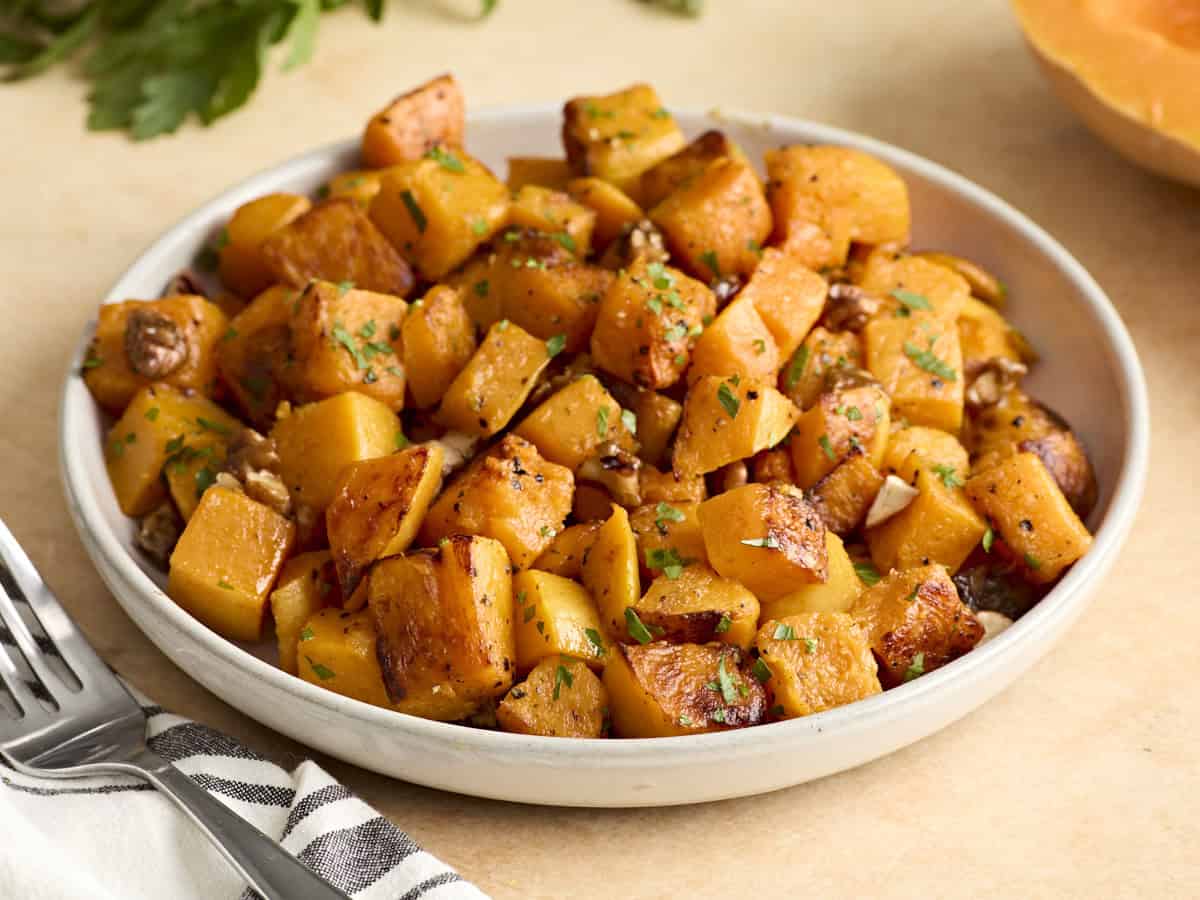
Roasted Butternut Squash
Cost $5.67 recipe / $0.47 serving
Ingredients
- 1 butternut squash (mine was 2lbs 15oz., $4.74)
- ¼ cup oil ($0.77)
- 1 tsp salt ($0.01)
- ½ tsp black pepper (freshly cracked, $0.08)
- ½ tsp garlic powder ($0.07)
Video
Instructions
-
Preheat oven to 400℉ and peel butternut squash.
-
Cut butternut squash in half lengthwise and remove seeds.
-
Dice butternut squash into consistently-sized pieces. I went for a large dice! Make sure you cut them all around the same size so they cook evenly and at the same pace.
-
Toss diced butternut squash in oil, salt, pepper, and garlic powder.
-
Spread butternut squash out evenly on a parchment-lined baking sheet. Try to give the pieces space so they roast instead of steam. I had to use 2 baking sheets because my squash was huge!
-
Bake for 35 minutes*, shaking the pan or tossing with a spatula half way.
-
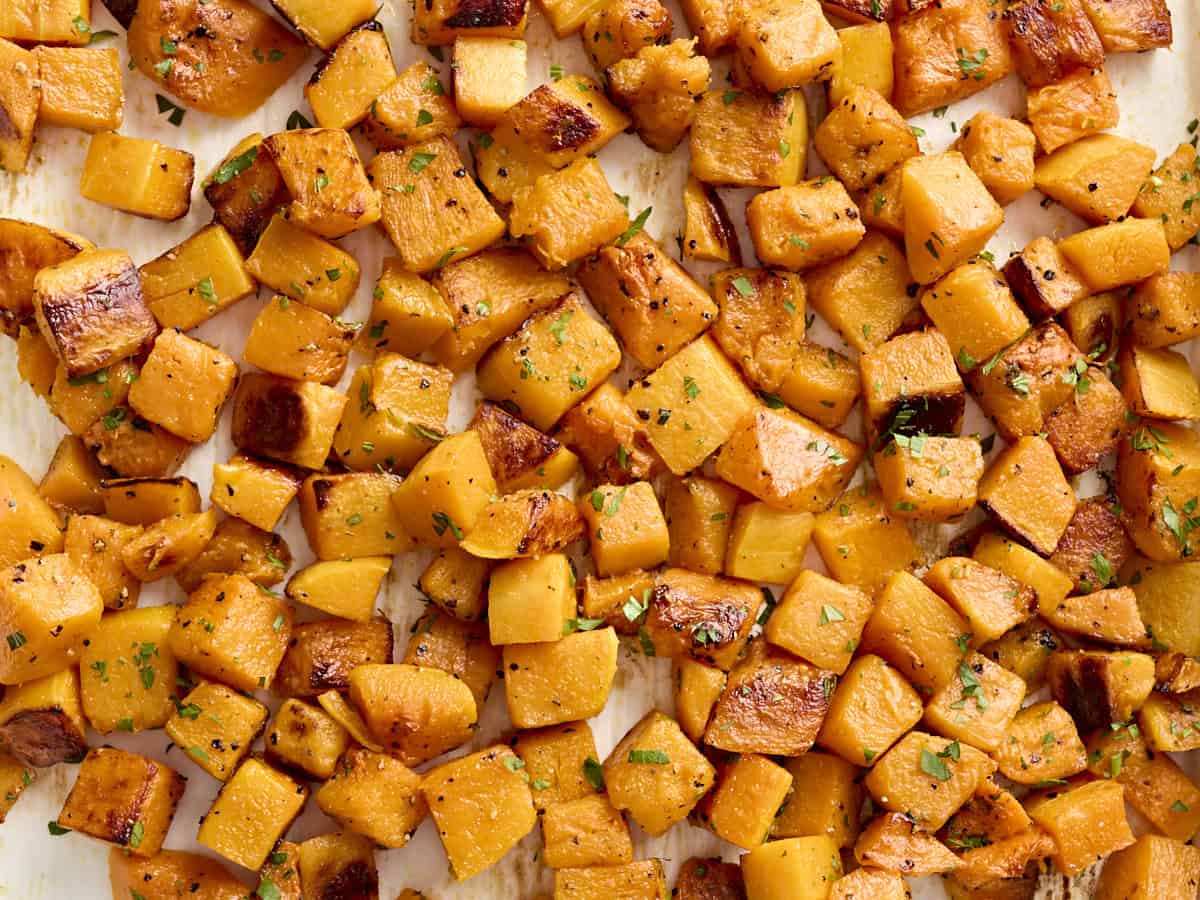
Once done, the butternut squash should be tender with lightly browned edges. Serve and enjoy!
See how we calculate recipe costs here.
Notes
Storage & Reheating
- Fridge: Let the roasted squash cool, then refrigerate in an airtight container for 3-4 days.
- Reheating: Reheat in a 350°F oven, in the microwave, or in a skillet over medium heat until heated through. I prefer the oven when I want to bring back some of those browned edges.
- Freezing: Freeze the cooled cubes in a single layer on a parchment-lined baking sheet until solid, then transfer to a freezer-safe bag or container for up to 3 months. I typically use frozen roasted squash in soups and stews (or for mashing) as they can get mushy when thawed.
Nutrition Information
 Have you tried this recipe?Mention @budgetbytes or tag #budgetbytes on Instagram!
how to make Roasted Butternut Squash step-by-step photos
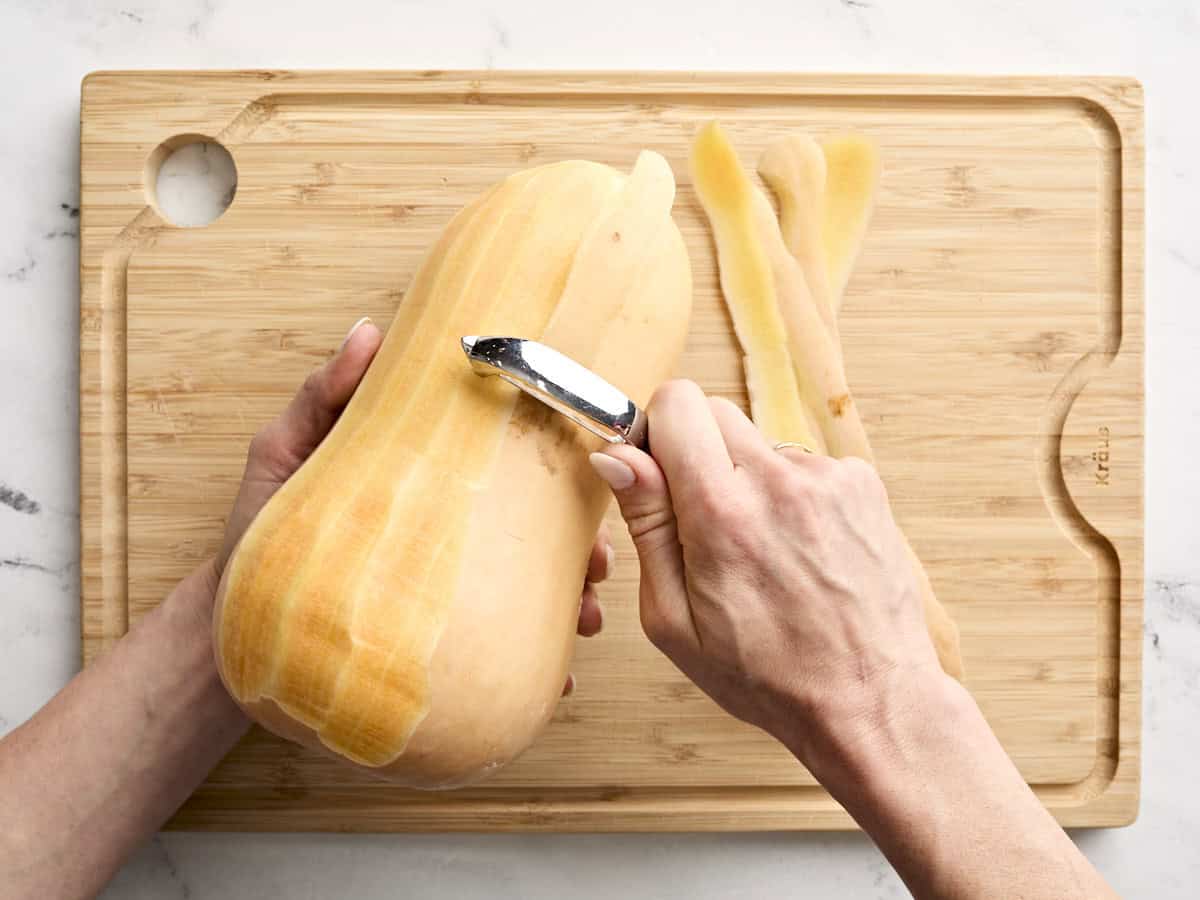
Peel the squash: Preheat the oven to 400°F. Wash and dry 1 butternut squash, then remove the skin with a vegetable peeler. Make sure you peel away the pale outer layer so the orange flesh is exposed. If the skin is difficult to remove, microwave the whole squash for 2-3 minutes and then peel (it’ll be much easier!)

Remove the seeds: Cut the peeled squash in half lengthwise and scoop out the seeds and stringy membrane with a spoon. The center should look clean, with no loose strands or seeds remaining.
I also recommend roasting the seeds as you would pumpkin seeds—yes, butternut squash seeds are edible, too!
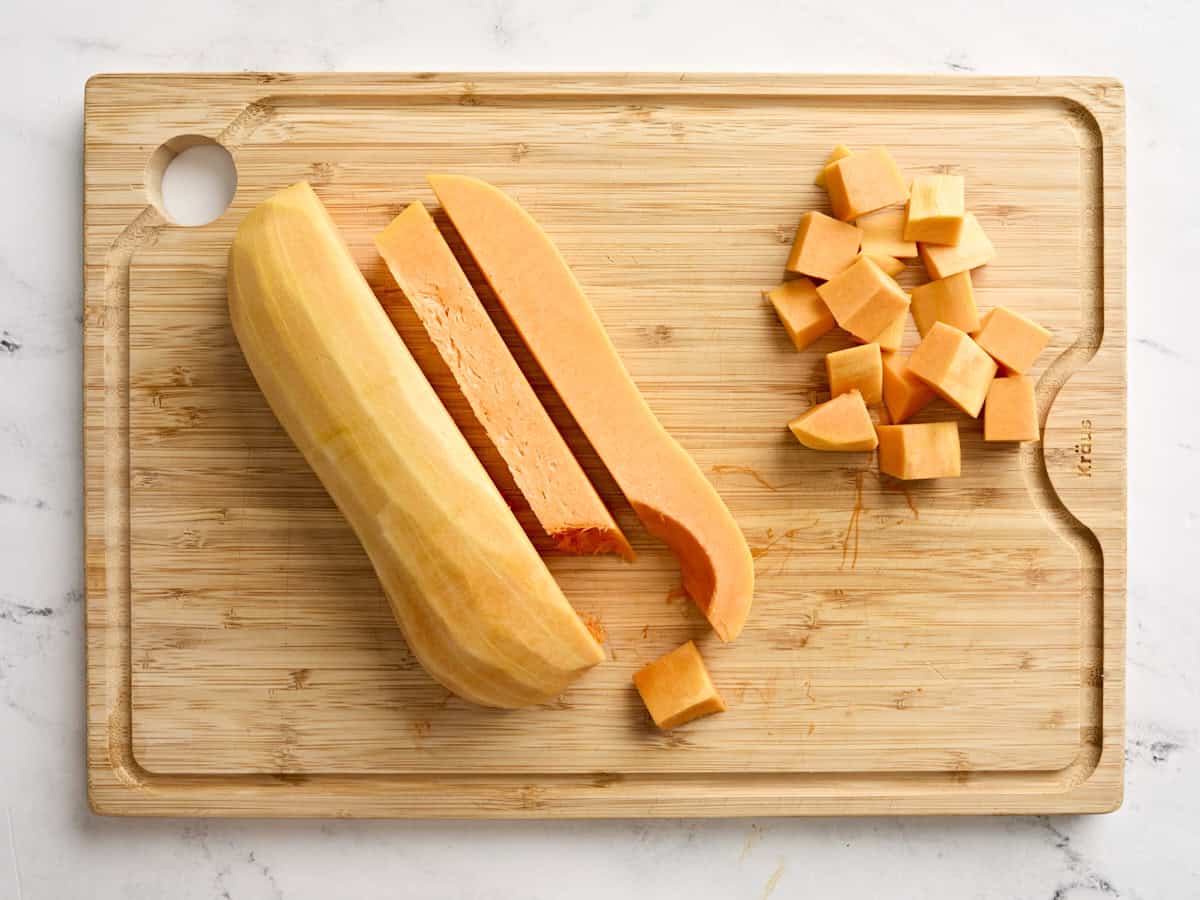
Dice the squash: Cut the butternut squash into evenly sized pieces using a sharp knife. I went for a large dice, roughly 1-inch cubes, as shown here! Try to keep the pieces similar in size so they cook at the same pace. Smaller cubes will soften more quickly, so adjust the roasting time if needed.
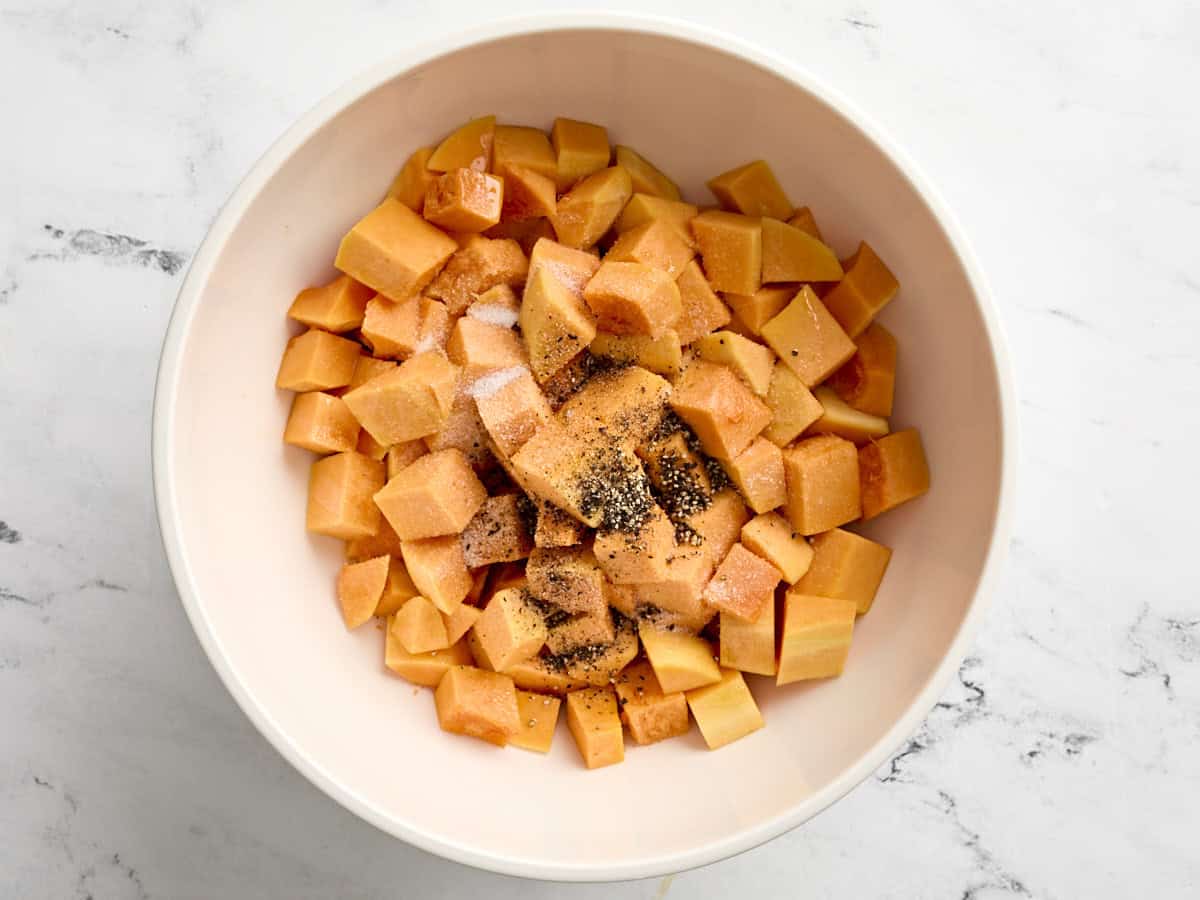
Add the seasonings: Toss the diced squash with ¼ cup oil, 1 tsp salt, ½ tsp freshly cracked black pepper, and ½ tsp garlic powder. Mix well until the cubes look lightly glossy and the seasonings are evenly distributed. I want every piece nicely coated before it goes into the oven!
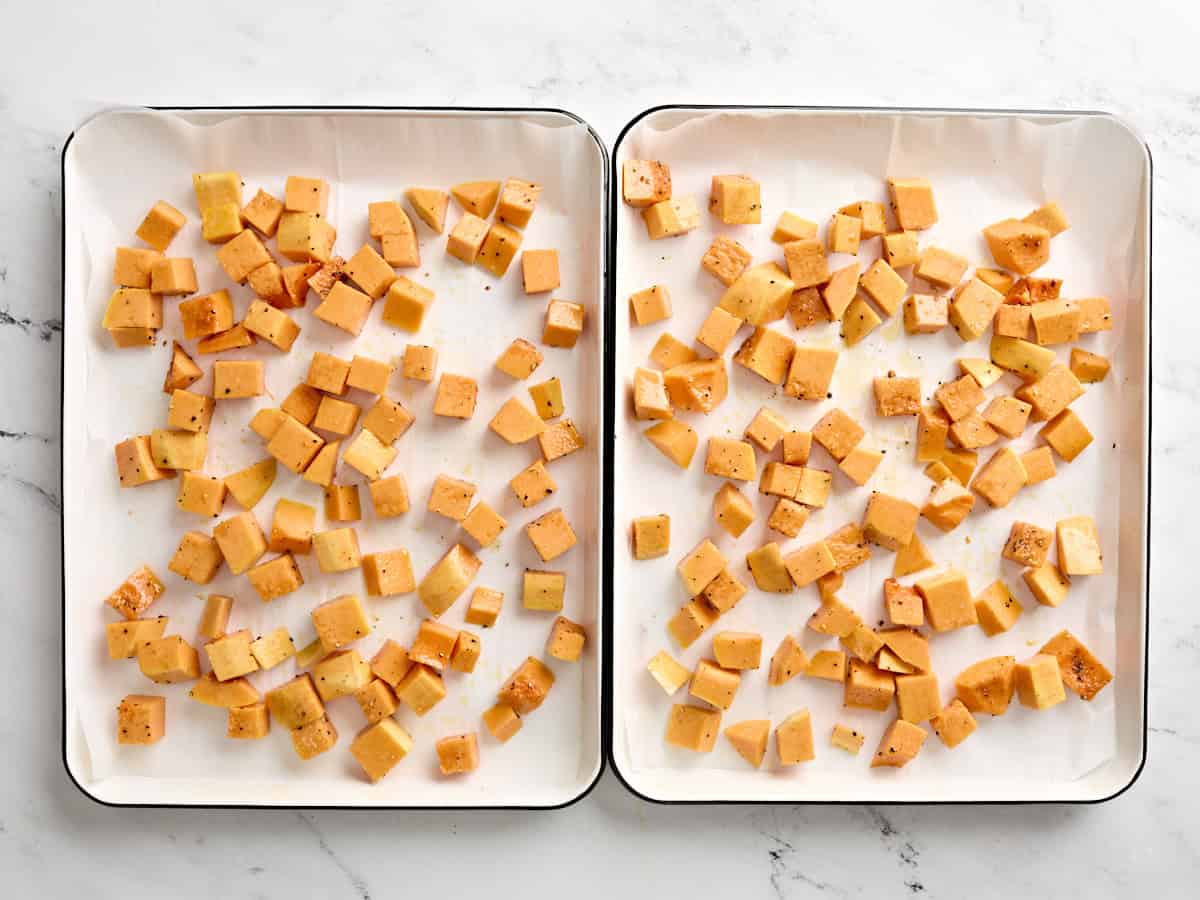
Spread onto baking sheets: Arrange the seasoned butternut squash in a single layer on parchment-lined baking sheets. Leave some space between the pieces so hot air can circulate and the edges can brown. I needed two baking sheets because my squash was huge.
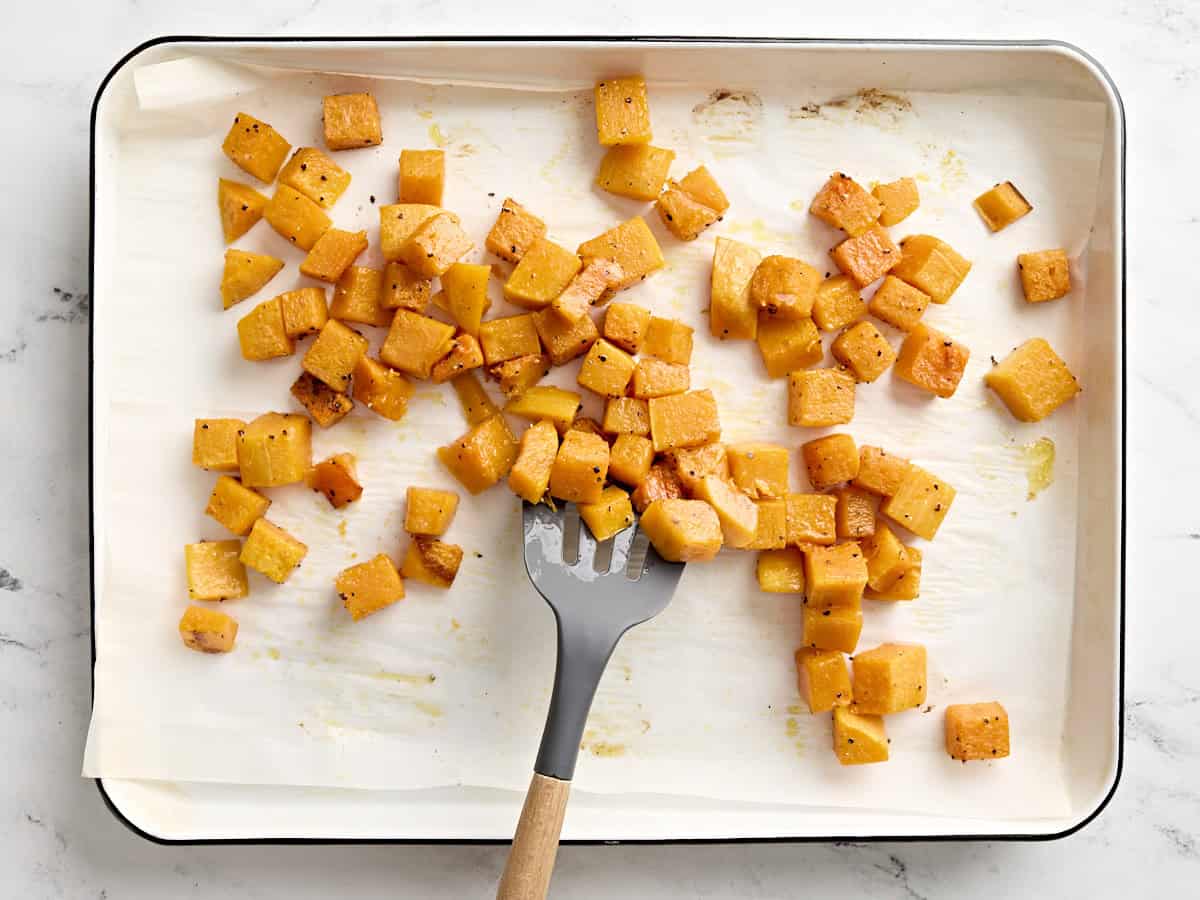
Roast the squash: Bake for approximately 35 minutes, shaking the pans or tossing the squash with a spatula halfway through. This exposes more cut surfaces to the heat for even browning. Keep an eye on any smaller pieces near the end of the cooking time.
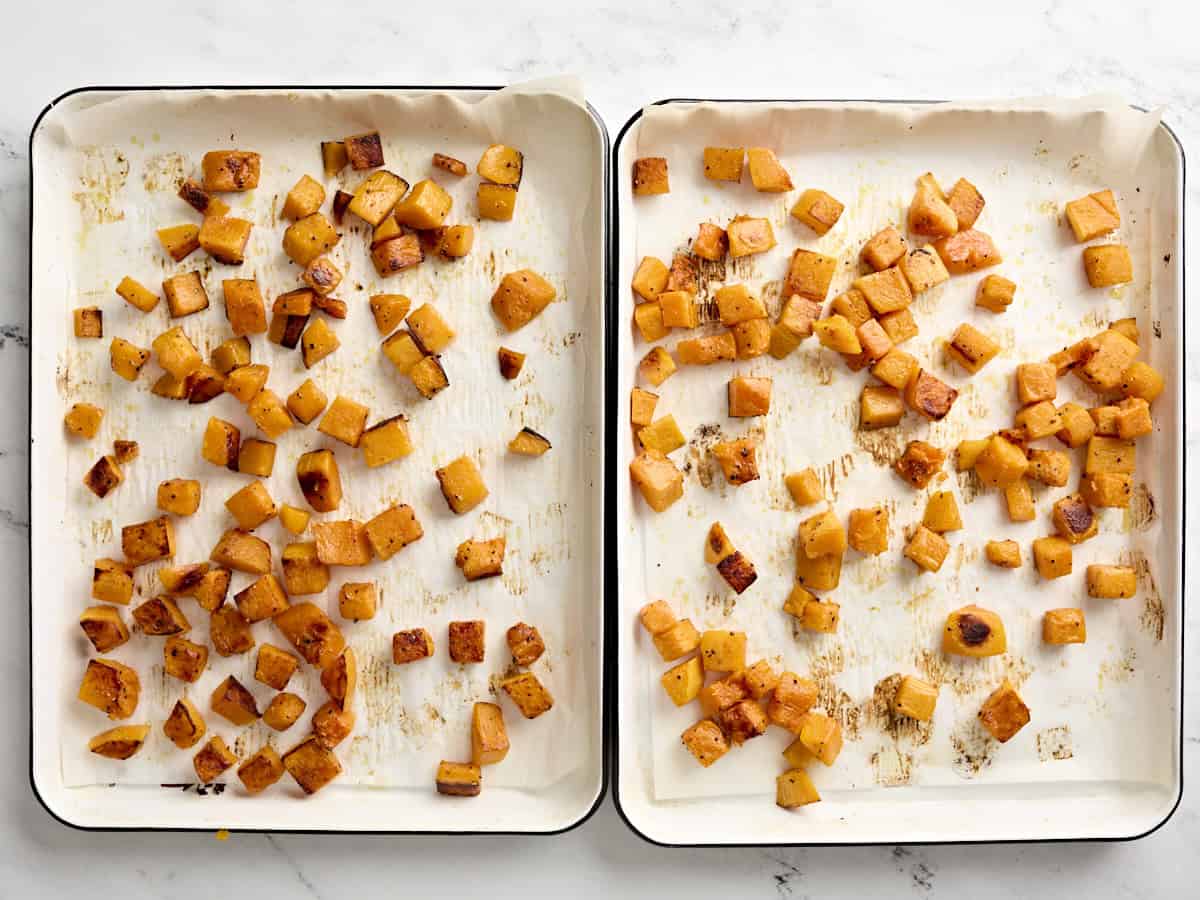
Check for doneness: The roasted butternut squash should have lightly browned edges and tender centers. A fork should slide easily through the thickest piece, but the cubes should still hold their shape rather than fall apart. If the largest pieces are still firm, roast for a few more minutes. Serve warm and enjoy!
What to Serve with Roasted Butternut Squash
I think roasting is by far the best way to cook butternut squash. It brings out all the natural flavors that other cooking methods just can’t replicate! Plus, it’s a great way to add some healthy vegetables to your meal without sacrificing taste or texture. For Thanksgiving, I like tossing the roasted squash with dried cranberries and walnuts just before serving. The cranberries add a little tartness, and the walnuts give it a lovely crunch (the BEST mix of textures)! Or for something a little different, try sprinkling the warm squash with salty feta cheese and a drizzle of homemade balsamic glaze.
This squash also makes an easy fall side for roasted chicken or, for another protein option, my apple butter pork chops. I especially like how the pork chops cook on the stovetop, so you can make them as the squash roasts. And if you have leftovers, I love tossing them into a winter salad with peppery arugula, crisp apples, and a drizzle of honey mustard sauce. The sweet squash is delicious with those sharper flavors, and it’s a great way to stretch one batch into another meal.

Other Butternut Squash Recipes
- Turn butternut squash into a creamy one-pot meal with our Creamy Butternut Squash Orzo, made with kale, Parmesan, and a splash of heavy cream!
- For something smooth and cozy, I love how this Butternut Squash Soup roasts the squash first before blending it with sage, nutmeg, broth, and cream.
- Our Butternut Squash Lasagna layers creamy squash purée with mushrooms, kale, cheese, and a sage brown butter béchamel for a hearty vegetarian dinner.
And if you’ve still got more squash to use up, check out our collection of squash recipes for even more budget-friendly ideas!
More Winter Squash Recipes