Simple Sautéed Vegetables
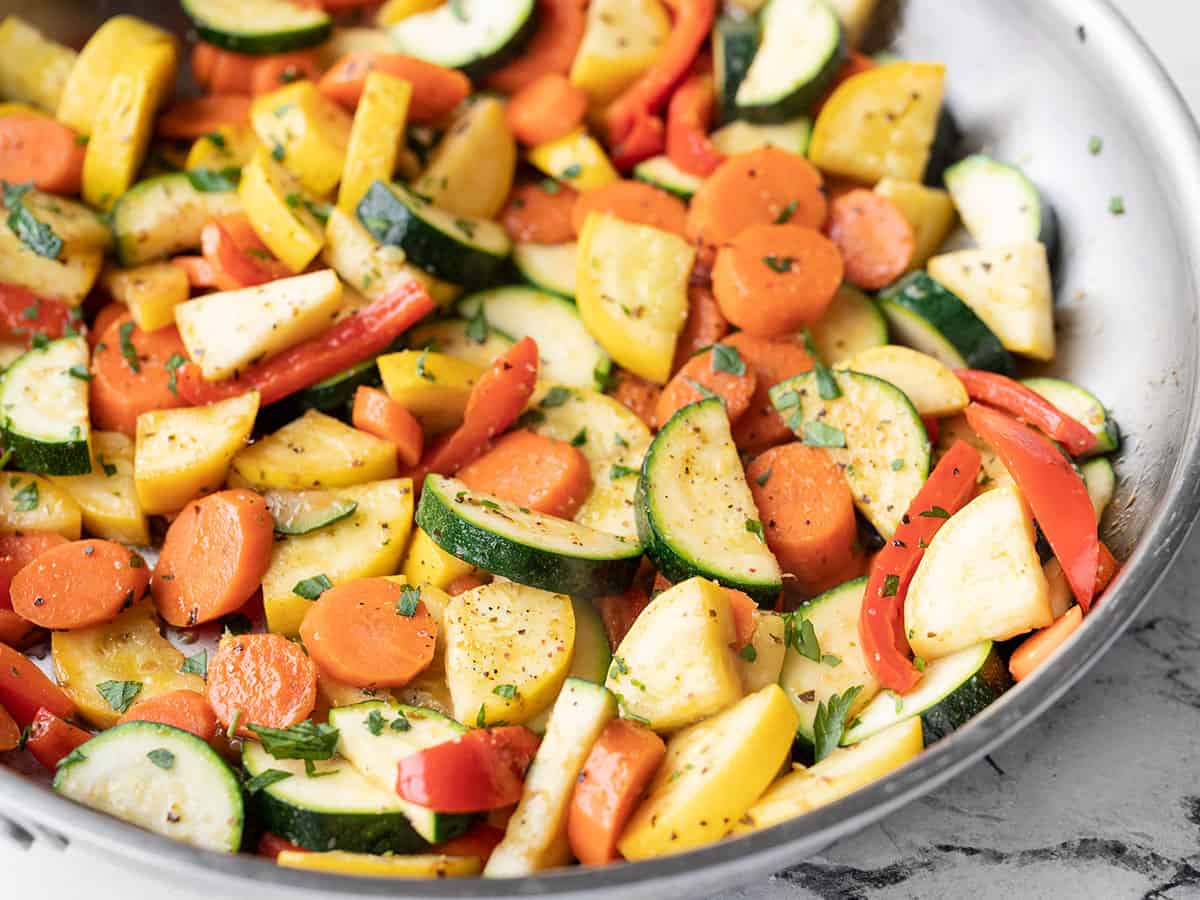
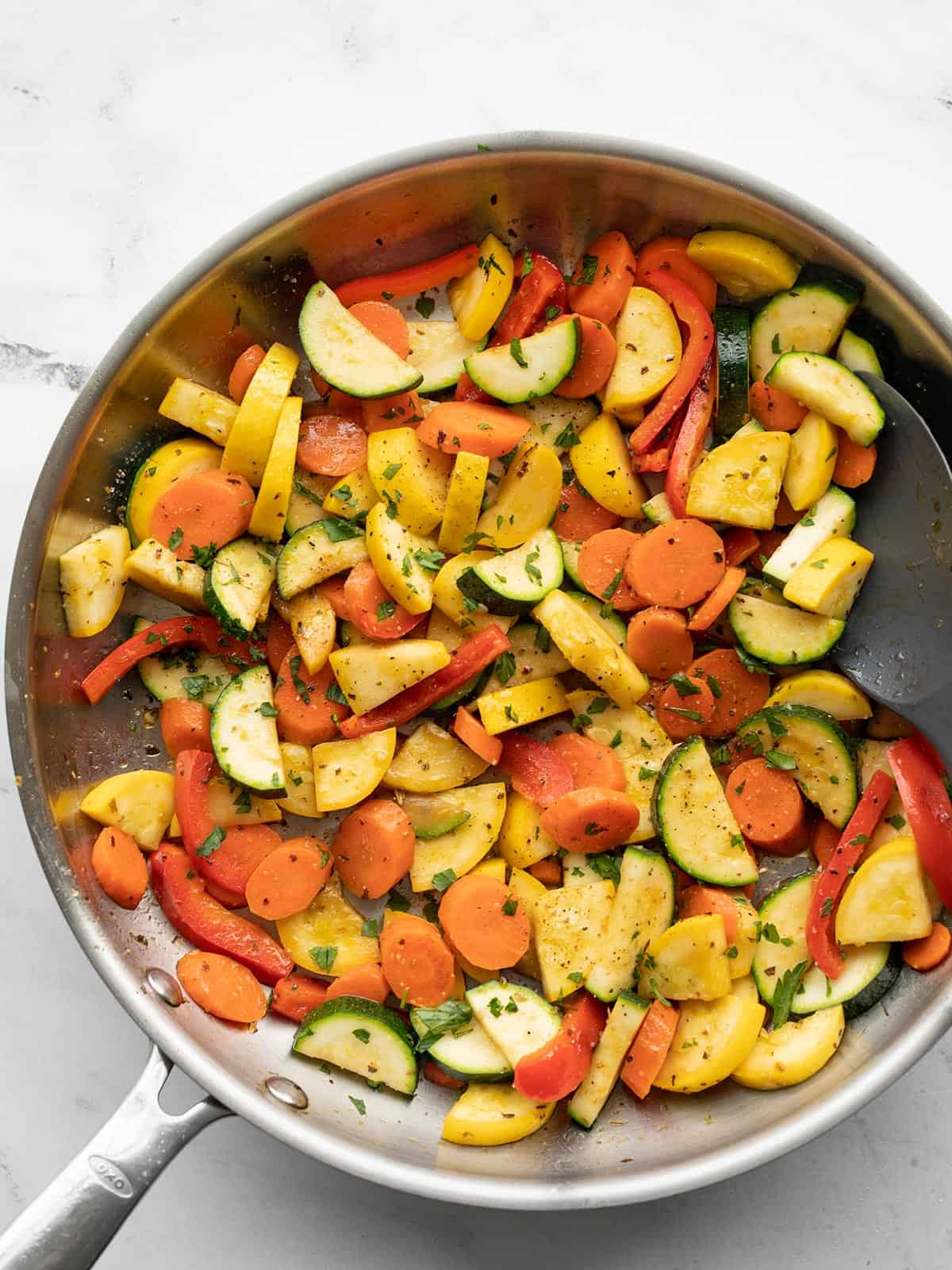
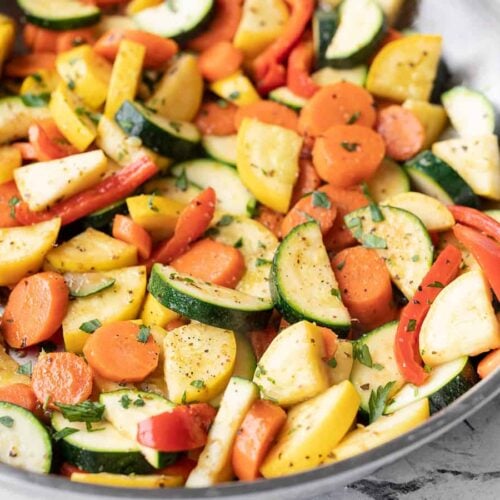
“What should I serve on the side?” is one of the most common questions I get. So it’s never a bad idea to have an arsenal of simple side dishes that you know how to make by heart, and that can be paired with just about anything you cook. These simple sautéed vegetables are exactly that. They’re easy, colorful, delicious, flexible, and go with just about anything you make for dinner.
“Has quickly become one of my go-to side dishes when I don’t know what to pair with my meat. So good! I like to add red onion to mine :)”
Sara
This is actually more of a technique than a recipe because you can swap in just about any vegetable or seasoning that you like. However, the one true key to making these sautéed vegetables turn out well is to make sure you use a really hot skillet. Medium-high works well for me, but this can vary depending on your cookware and the individual settings on your stovetop. The skillet should be hot enough that water sprinkled on the surface sputters and spatters, but not hot enough that the oil begins to smoke.
Why high heat? High heat ensures that any moisture coming out of the vegetables evaporates quickly instead of pooling in the skillet, which would cause the vegetables to simmer and soften instead of staying nice and crisp!
Simple Sautéed Vegetables
Cost $3.33 recipe / $0.83 serving
Ingredients
- 3 carrots ($0.24)
- 1 zucchini ($0.93)
- 1 yellow squash ($1.10)
- 1/2 red bell pepper* ($0.74)
- 1 Tbsp cooking oil ($0.04)
- 1/4 tsp dried basil ($0.03)
- 1/8 tsp dried oregano ($0.02)
- 1/8 tsp garlic powder ($0.02)
- 1/8 tsp salt ($0.02)
- 1/8 tsp freshly cracked black pepper ($0.02)
- 1 Tbsp butter ($0.12)
- 1 Tbsp chopped fresh parsley (optional) ($0.05)
Instructions
-
Peel and slice the carrots. Chop the zucchini and yellow squash into half-rounds. Slice the bell pepper.
-
Heat the skillet over medium-high. Once the skillet is very hot, add the cooking oil and swirl to coat the surface. Add the sliced carrots and sauté for about 2-3 minutes.
-
Next, add the bell pepper, zucchini, squash, basil, oregano, and garlic powder. Continue to sauté for 2-3 minutes more, or just until the vegetables begin to soften. You want to take the raw edge off the vegetables, but not cook them to the point where they are limp.
-
Once the vegetables have just begun to soften, remove the skillet from the heat. Add the butter and toss until it has melted and coated the vegetables. Finally, season with a pinch of salt and pepper, give them a taste and adjust the salt or pepper as needed. Garnish with fresh chopped parsley just before serving.
See how we calculate recipe costs here.
Notes
Nutrition Information
 Have you tried this recipe?Mention @budgetbytes or tag #budgetbytes on Instagram!
How to Make Simple Sautéed Vegetables – Step by Step Photos
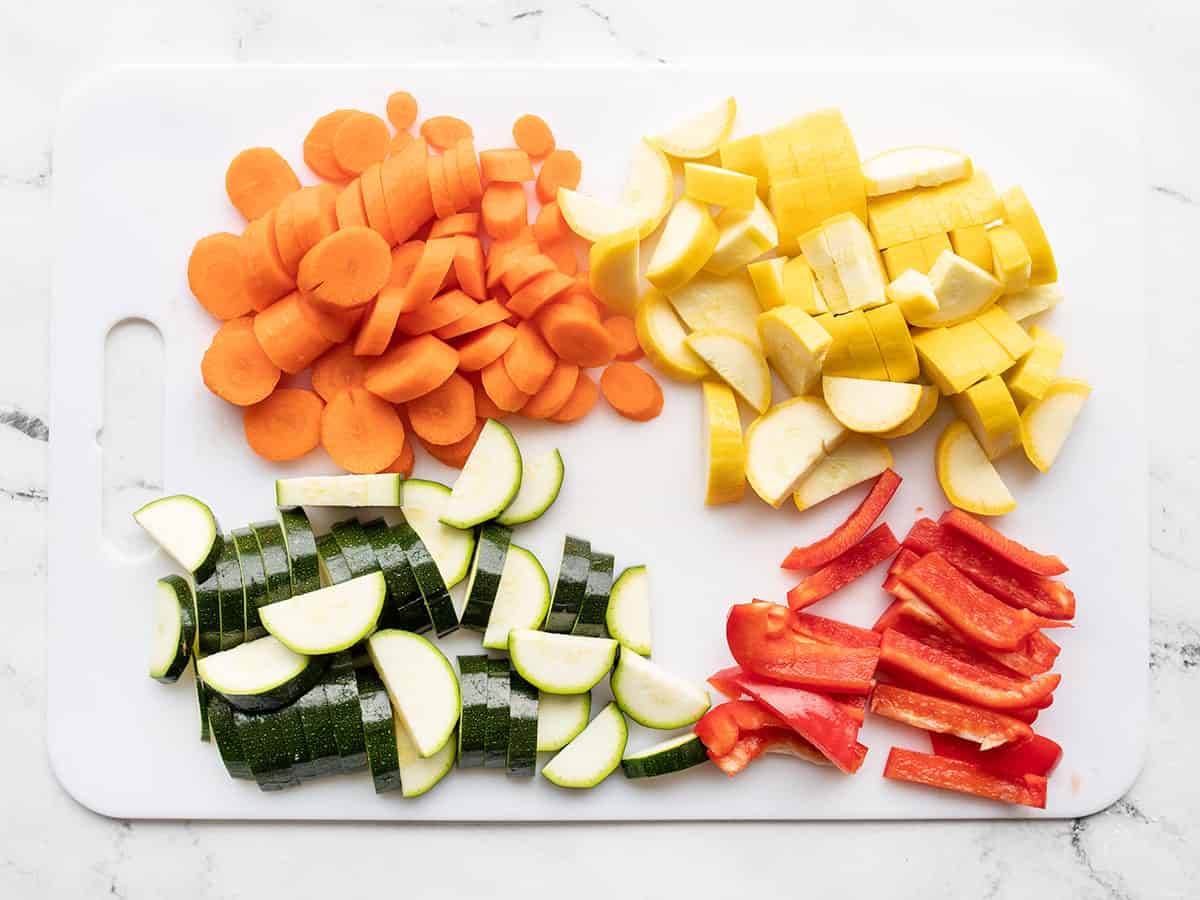
Prep your vegetables: Start by chopping all of your vegetables ahead of time because this dish cooks quickly, and you won’t have time to do any chopping after the cooking begins. I used 3 carrots, one zucchini, one yellow squash, and half of a red bell pepper (I had that left over from something else). Whatever vegetables you choose, aim for a variety of colors and textures.
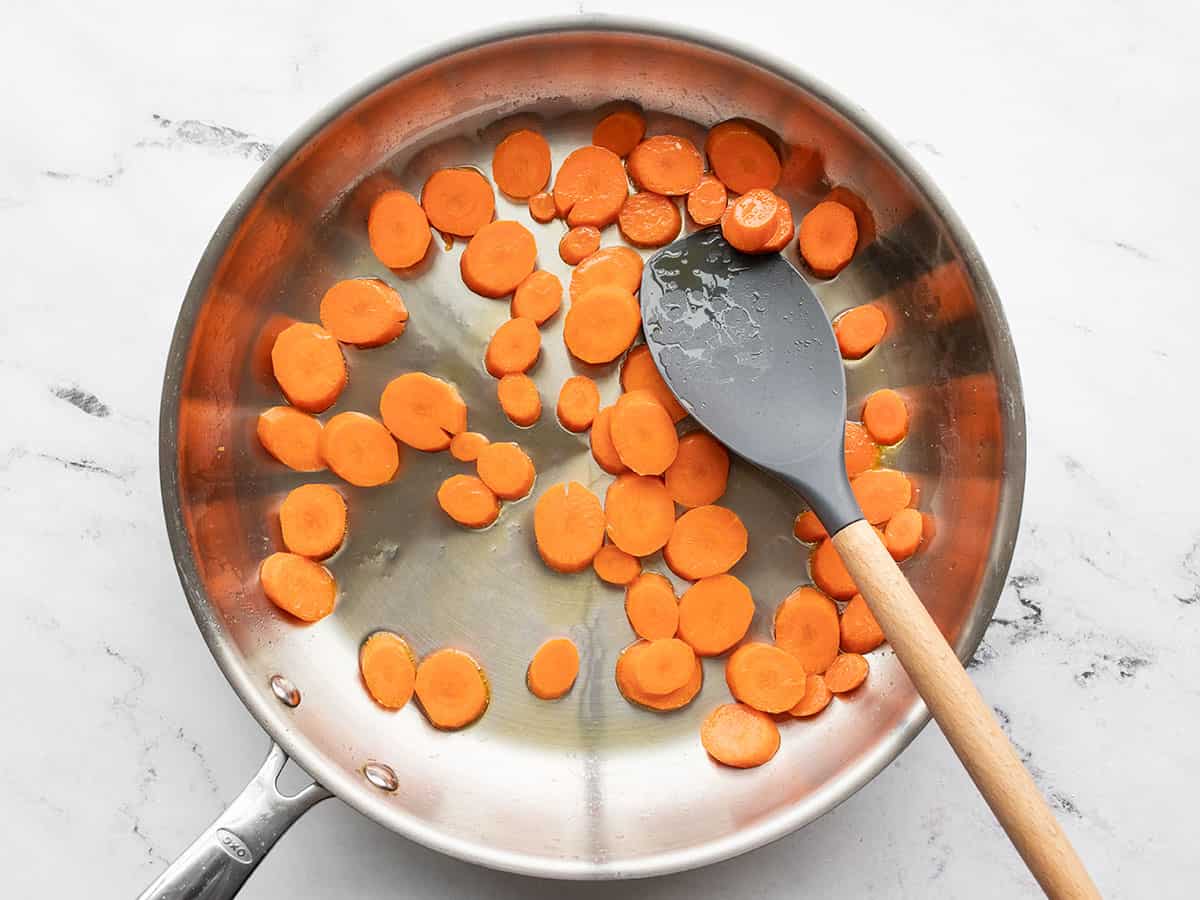
Sauté the carrots: Heat a large skillet over medium-high. Once the skillet is very hot, add 1 Tbsp cooking oil and swirl to coat the surface. Add the sliced carrots and sauté for 2-3 minutes. Since carrots are a hard vegetable and they take a bit longer to cook, they will go in before the rest of the vegetables.
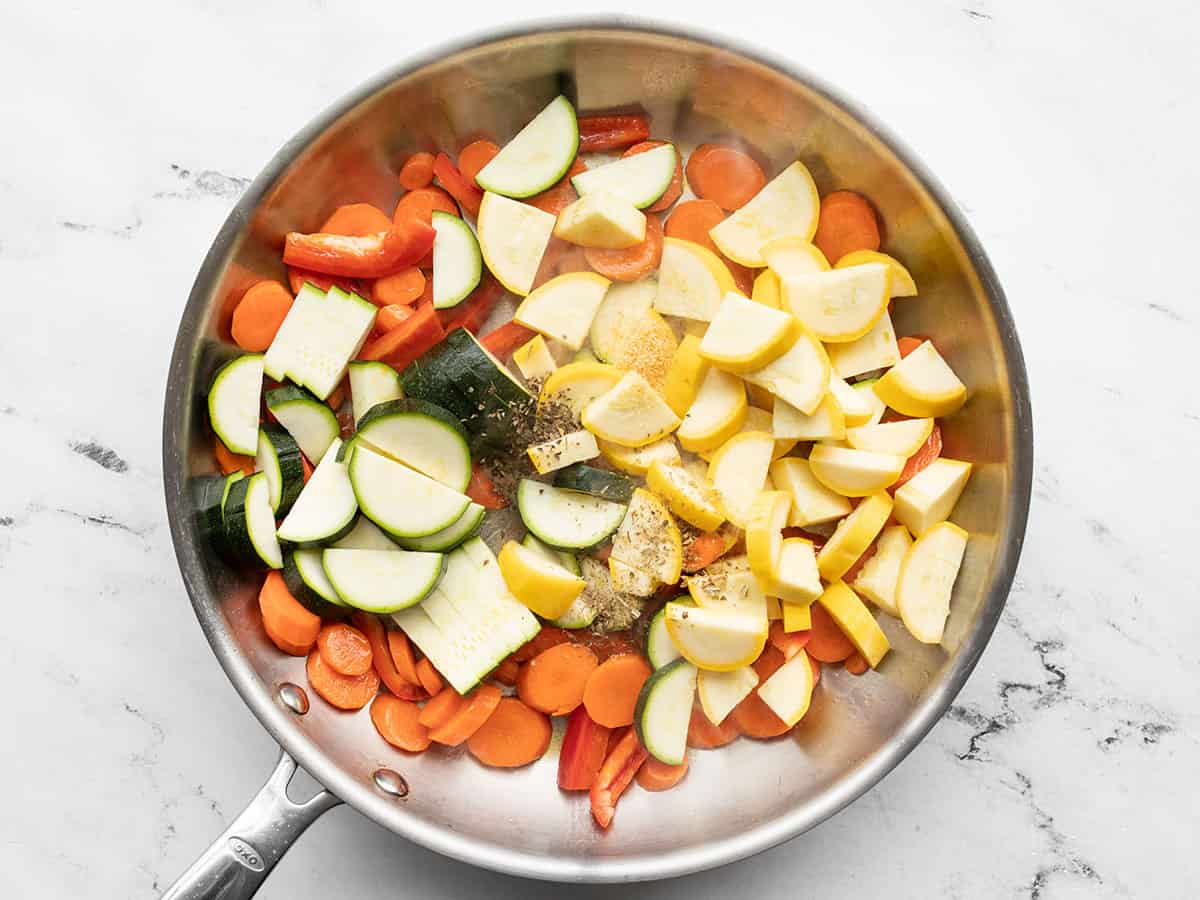
Add the other veggies: Next, add the zucchini, yellow squash, and bell pepper, along with ¼ tsp dried basil, ⅛ tsp dried oregano, and ⅛ tsp garlic powder. Sauté for 2-3 minutes more, or until the vegetables just begin to soften. You want to take the raw edge off, but not cook them to the point where they are soft and mushy.
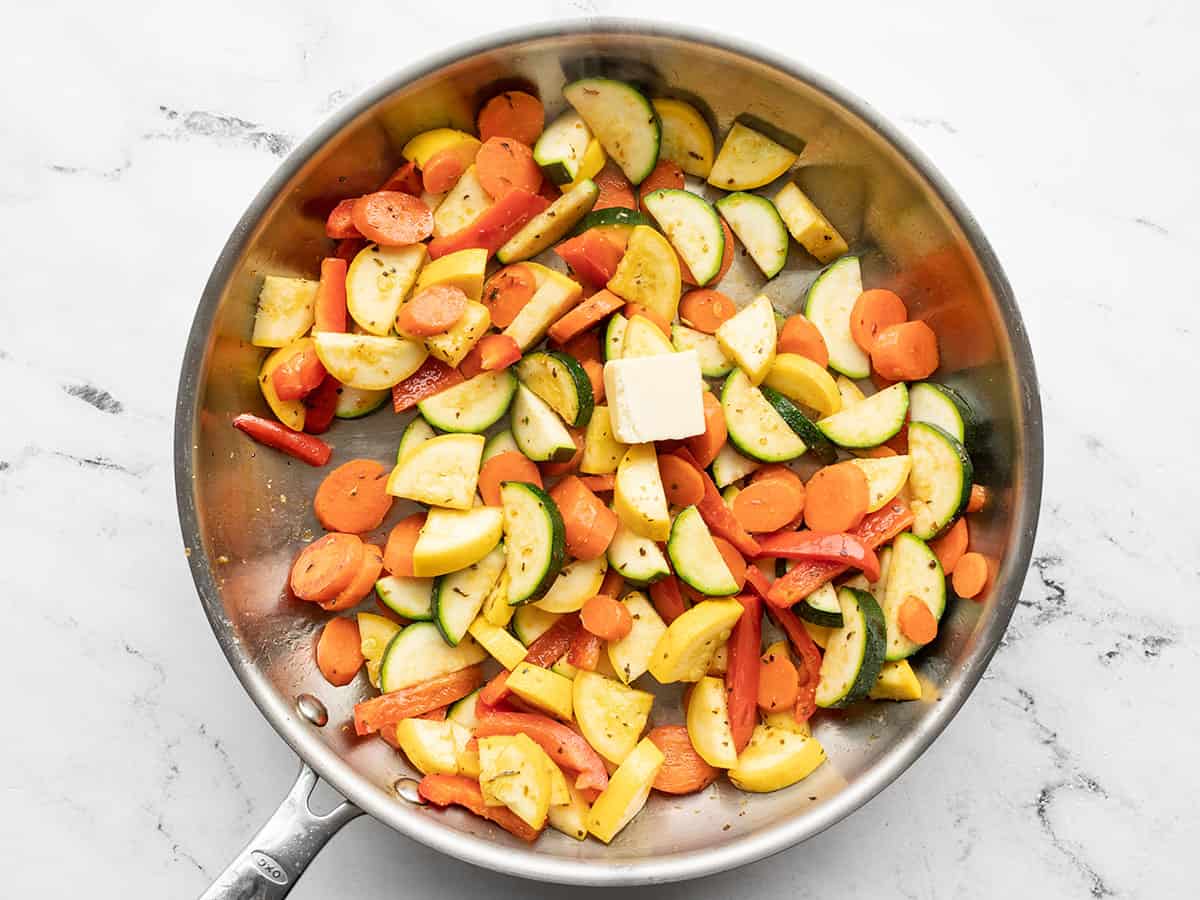
Coat with butter: Once the vegetables being to soften a bit, remove the skillet from the heat and add 1 Tbsp butter. Toss until the butter is melted and coating the vegetables.
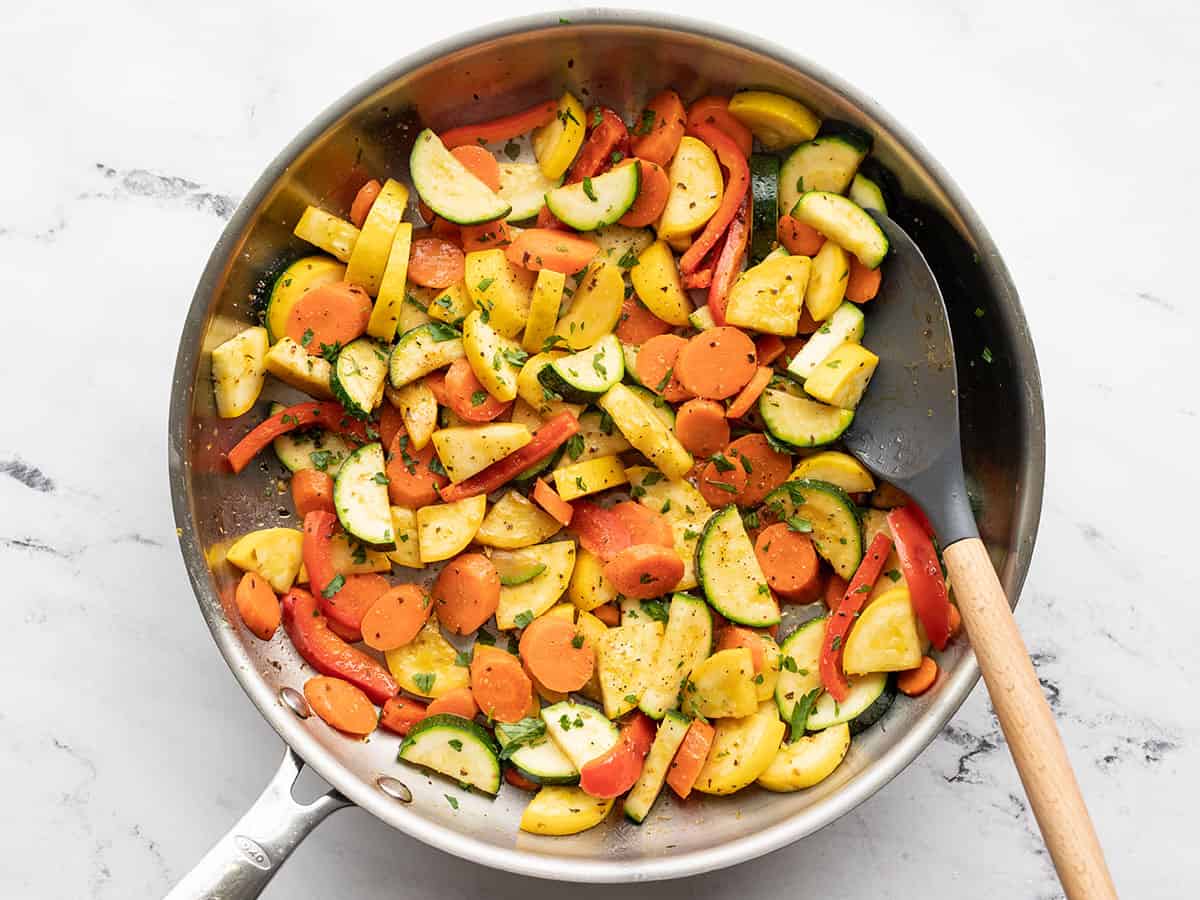
Serve: Finish the vegetables by seasoning with a pinch of salt and pepper. Give them a taste and adjust the salt and pepper to your liking. Garnish with chopped parsley (optional) and serve!
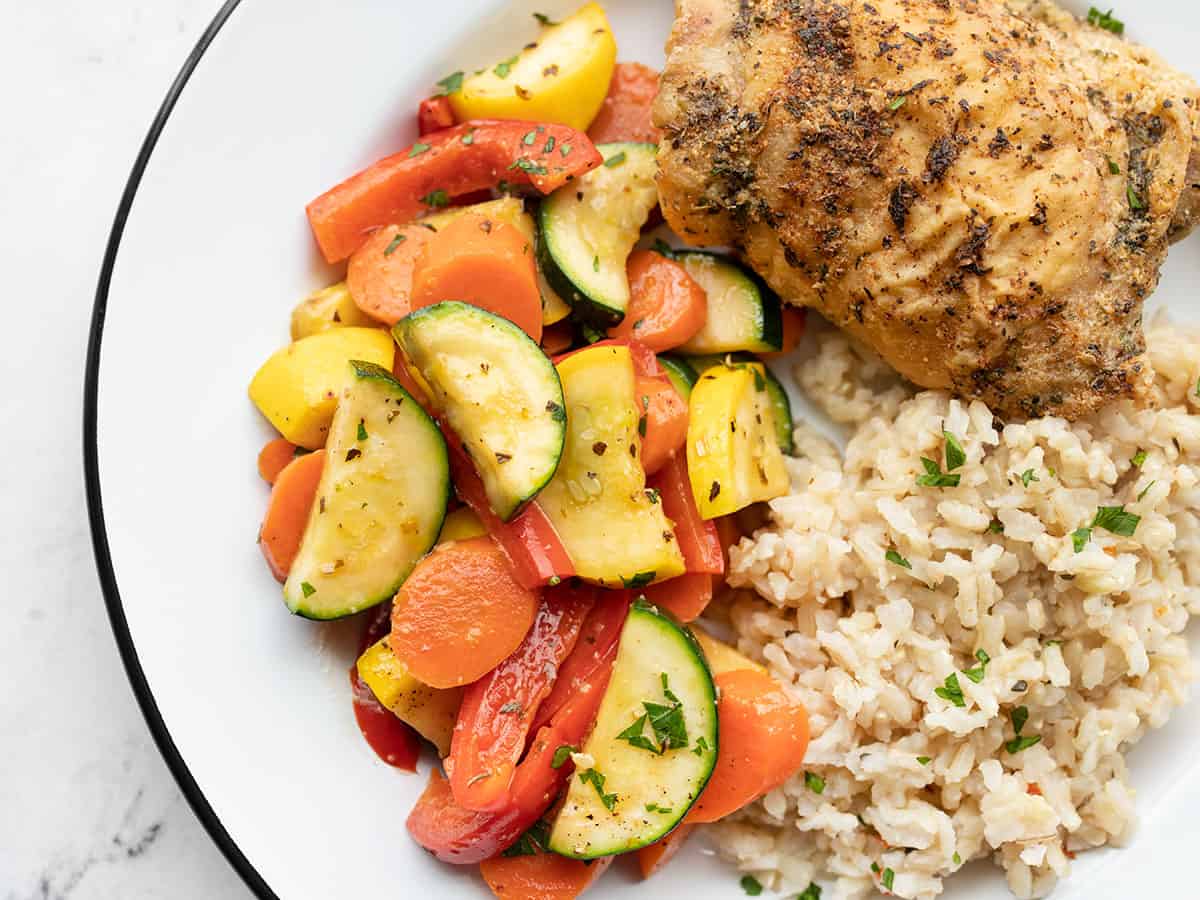
Vegetable Options
I used carrots, red bell pepper, zucchini, and yellow squash for my vegetable sauté, but you can swap in so many different types of vegetables. I suggest aiming for a variety of colors and textures, and chopping them into different shapes to keep things interesting.
The only other thing to know is to add hard vegetables to the skillet first and softer vegetables to the skillet last so they can all achieve a similar level of doneness. For example, I’d add onion after the carrots but before the squash and zucchini. Here are some great vegetable options:
- Broccoli
- Red or Yellow Onion
- Cauliflower
- Green Beans
- Snow Peas
- Brussels Sprouts
- Mushrooms
- Asparagus
While this quick sauté is a great option for most vegetables, here are a few that I’d avoid for this method:
- Potatoes (unless pre-boiled)
- Tomatoes (too watery, will create a wet cooking environment)
- Leafy Greens (you might get away with kale, but others are probably too delicate. If you really want to use them, add them at the end to wilt slightly before serving)
Seasoning Options
I use a super simple combination of basil, oregano, salt, and pepper for my vegetables because that mix goes with just about anything. But you can totally switch that up and add different seasonings to match your meal. Here are some other seasoning ideas:
- Lemon Pepper
- Taco Seasoning
- Greek Seasoning
- Curry Powder
- Herbs de Provence
- Steak Seasoning
- Garlic and Dill
- Fajita Seasoning
- Simple Salt & Pepper
See this sautéed vegetable technique used in my Cajun Sausage and Vegetables meal prep.